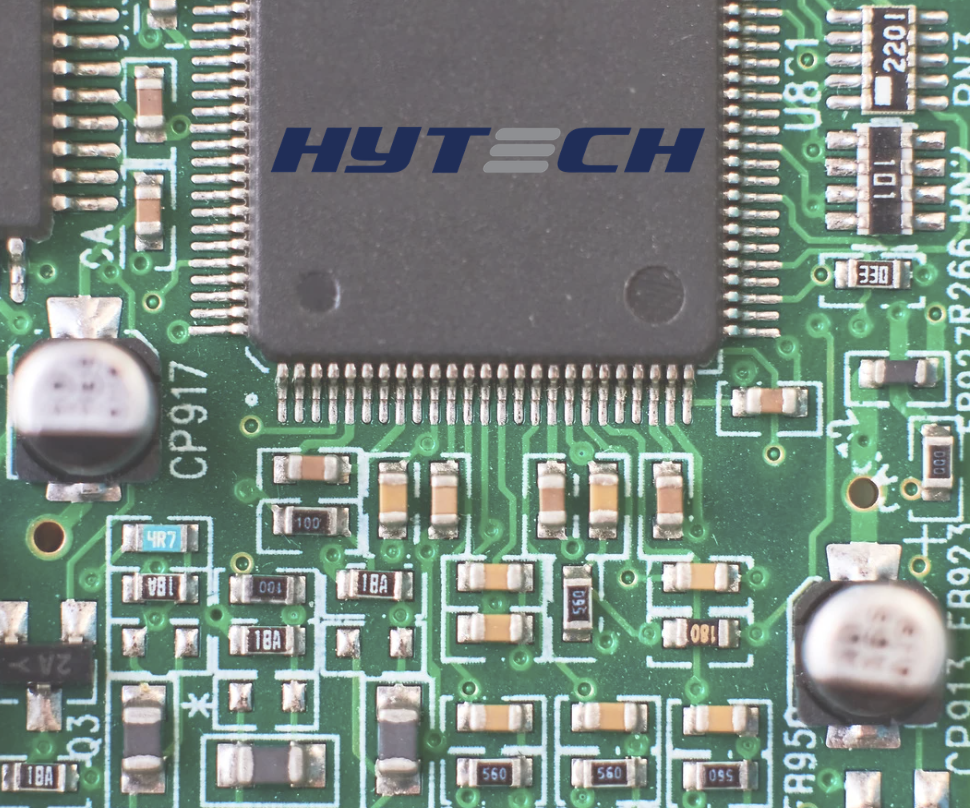
Precision small springs play a crucial role in today’s most demanding electronic test and sensing applications, in addition to the medical and aerospace applications we usually discuss. In virtually all cases, a few microns in tolerance can make the difference between rock-solid performance and intermittent failures.
At HyTech Spring & Machine, high-precision tolerances are the norm, along with highly specific functional performance parameters. Whether we’re manufacturing small springs for contact probes for sensors, or Pogo pins/spring probes, meeting end product performance targets means meeting exact customer specifications.
To put the tolerances into perspective, we typically perform coiling and complex forming operations on wire diameters ranging from 0.001” up to 0.180”. At the smaller end of the scale, the wire diameters are roughly equivalent to a single human hair. That means our tolerance control must likewise scale down to produce repeatable features at the micron level.
- Contact Probes for Sensors: Precisely controlled force and travel are imperative to achieve repeatable signal quality, which translates into stable sensing thresholds.
- Circuit Board Test Assembly and Fixture Components: Including in-circuit test (ICT) and functional test (FCT) probes that must precisely align within tight positional tolerances to reliably hit fine-pitch pads and vias.
- Pogo Pins and Spring Probes: Used in high-density connectors and temporary test interfaces, where tiny diameters and short overall lengths demand extremely consistent spring compliance-to-length ratios.
Tiny Tolerances Are Critical in Electronics and Circuit Testing Fixtures
In contact probe and pogo pin assemblies, the springs are the star of the show. They’re the active elements that largely control contact force, stroke, and electrical continuity.
Even the smallest shifts in wire diameter, coil count, or free length can change spring rate enough to cause under‑ or over‑travel at the tip. That results in poor contact or damaged pads. Tight control of outside diameter and free length is also essential to ensure that the spring nests correctly within its barrel, maintains consistent guidance, and avoids buckling under compression.
For high-density board test and miniature sensor designs, these tolerances are typically in the hundredths or even thousandths of a millimeter, which means conventional forming methods and basic inspection are no longer sufficient. Consistency across large probe counts is equally important: a fixture with thousands of test probes is only as reliable as its weakest spring.
Spring Force and Its Impact on Electrical Performance
Electrical performance starts at the contact interface. It’s the spring that defines the force that the probe tip applies to the pad or test point. If force is too low, the probe may not break through oxides or contamination, resulting in elevated or unstable contact resistance; if it is too high, there is greater risk of pad damage and excessive board flex.
In many ICT/FCT fixtures, as well as in many spring probe designs, individual contact forces are specified in the range of a few grams up to a few hundred grams, with total fixture forces carefully managed to avoid stressing the PCB or vacuum system.
Of course, your spring geometry and material selection also influence resistance stability over millions of cycles. A spring that takes a set, fatigues prematurely, or loses force will cause contact resistance to drift. That’s unacceptable in virtually all modern sensor probes, precision instrumentation, and high-reliability test fixtures.
By tightly controlling the spring’s dimensions, surface finish, and heat treatment, HyTech helps ensure low, consistent contact resistance for the life of the assembly. That translates into more consistent spring performance along with better long-term reliability.
Mechanical Reliability and Spring Service Life
Every compression cycle subjects the spring to stress. In high-use test fixtures and sensor interfaces, cycle counts can quickly reach into the hundreds of thousands or millions. Dimensional accuracy directly affects stress distribution: even small deviations in wire diameter or mean coil diameter will increase local stresses, shorten fatigue life, and accelerate relaxation under load.
That’s why we have to maintain precise control over tolerances to keep actual operating stress within the intended design window. Precision manufacturing results in predictable spring rate, stroke, and set behavior over time. Otherwise, unexpected force loss can compromise test coverage, accuracy, sensitivity, and other functional performance parameters, ultimately increasing retest rates and failures.
Quality Spring Manufacturing for Your Electronic Testing Requirements
As an ISO 9001:2015, AS9100:D, and IATF 16949:2016 certified contract manufacturer, HyTech Spring & Machine relies on documented process control, advanced measurement tools, and rigorous inspection plans to verify that every critical characteristic stays within tolerance. Our process includes monitoring key parameters such as free length, outside diameter, spring rate, and functional load/deflection through statistical methods so that large production lots maintain the same high level of performance as the first approved samples.
Get in touch to learn more about our precision processes, or to discuss producing your own custom small springs with one of America’s leading manufacturers since 1984.